
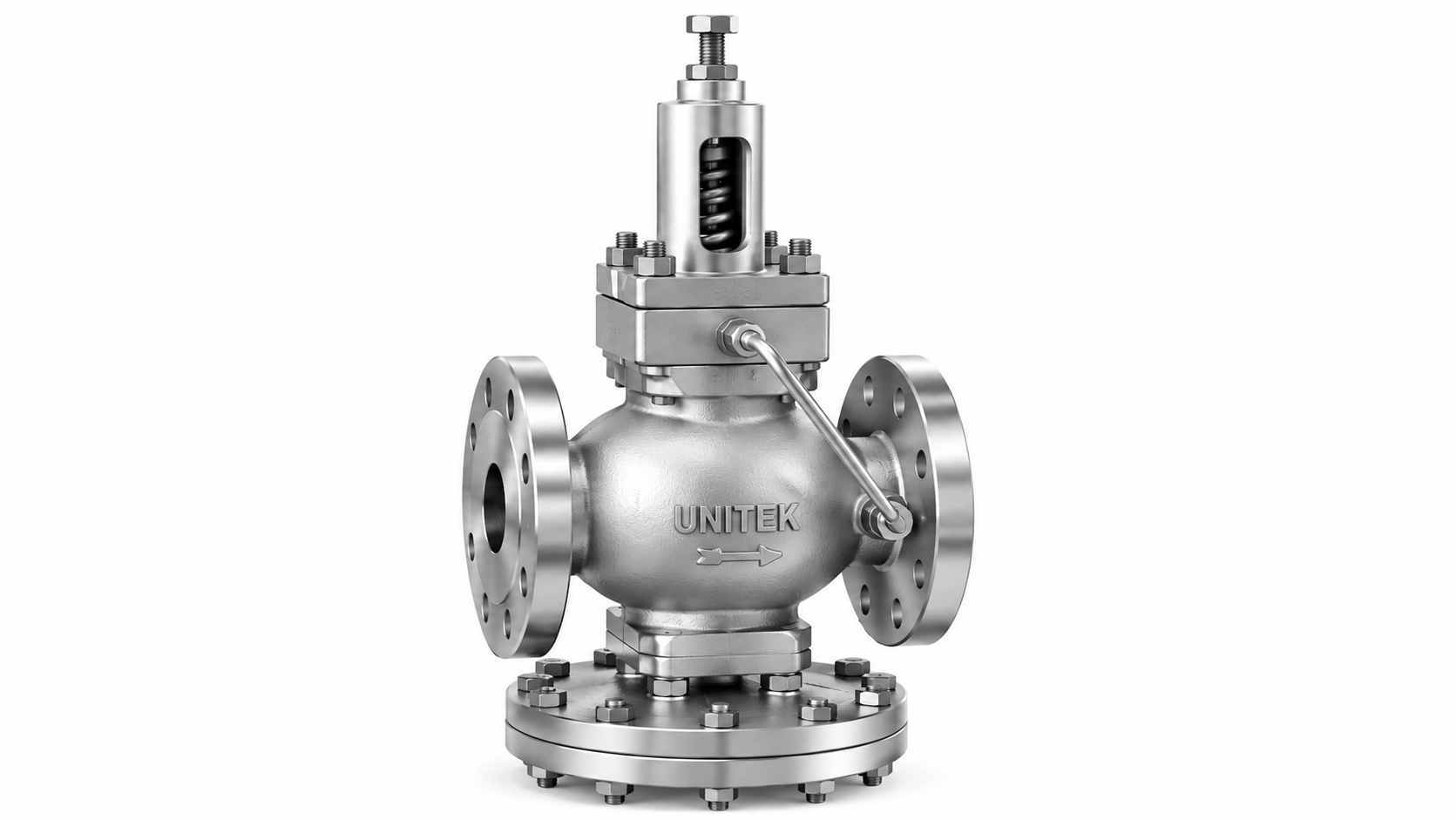
IBR Pressure Reducing Valve
Description
IBR Pressure Reducing Valve Manufacturer in India
An IBR Pressure Reducing Valve is an essential industrial flow-control device engineered to reduce a higher upstream pressure to a stable, controlled lower downstream pressure. In steam distribution networks, boiler systems, and industrial piping installations, maintaining precise pressure differentials is critical for protecting downstream equipment, ensuring process stability, and optimizing thermal efficiency. When fluctuating high-pressure steam enters the valve, the internal regulating mechanism modulates flow to deliver a consistent, safe working pressure required by downstream machinery.
Unitek Valves operates as a trusted manufacturer, supplier, and exporter of industrial valves in Mumbai, India, providing reliable pressure regulation and flow-control solutions for domestic industrial plants and international export markets.
What is an IBR Pressure Reducing Valve?
A Pressure Reducing Valve (PRV) is an automatic mechanical device designed to maintain a predetermined reduced downstream pressure regardless of fluctuations in the higher upstream inlet pressure.
-
Upstream vs. Downstream Pressure: The valve acts as a restrictive throttle in the pipeline, taking a high-energy upstream pressure source and dropping it to a controlled, lower working pressure suitable for downstream equipment.
-
Normal Operating Conditions: These devices function continuously during normal plant operation, dynamically balancing flow rates to sustain steady pressure conditions across process loops.
-
Industrial Application: Widely specified across steam, gas, and liquid utility lines where different sections of a facility require distinct operating pressure thresholds.
Note: Actual performance, flow response, and pressure stability depend strictly on valve design, sizing parameters, operating pressure differential, temperature, and specific process requirements.
How Does an IBR Pressure Reducing Valve Work?
The operational principle of an IBR Pressure Reducing Valve relies on balancing fluid forces against an adjustable mechanical loading or sensing mechanism:
-
High-Pressure Entry: High-pressure fluid or steam enters the valve inlet and encounters the internal flow control restriction.
-
Pressure Reduction: As the medium passes through the variable opening created by the valve’s closing element, a pressure drop occurs, lowering the downstream pressure.
-
Sensing and Responding: Depending on the specific design architecture, the valve senses downstream pressure changes (often via internal balancing or external sensing lines).
-
Modulation: If downstream demand shifts or upstream pressure fluctuates, the valve automatically modulates its flow passage—opening wider or throttling down—to maintain the required downstream set pressure within operational limits.
Actual internal construction, such as direct-acting or pilot-operated configurations, depends on the selected valve model and service requirements.
IBR Pressure Reducing Valve for Steam Applications
Industrial steam systems frequently generate steam at high pressures to maximize boiler efficiency and minimize distribution pipe diameters. However, point-of-use equipment and process heat exchangers usually operate at much lower, safer pressure ratings. An IBR Steam Pressure Reducing Valve is deployed across steam networks to bridge this gap safely.
Suitable applications include:
-
Process steam supply lines
-
Steam distribution headers
-
Industrial utility and heating networks
-
Steam-driven equipment supply loops
-
Boiler-related steam distribution systems
IBR Pressure Reducing Valve for Boiler Systems
Boiler installations require precise pressure management to regulate steam delivery from the generation source to various plant headers. An IBR Boiler Pressure Reducing Valve helps maintain stable pressure parameters across boiler auxiliary lines and associated steam circuits. Selecting a suitable valve requires careful evaluation of steam conditions, pressure differentials, thermal limits, flow rates, and applicable project specifications.
IBR Pressure Reducing Valve for Power Plants
Thermal power plants and co-generation facilities handle massive volumes of high-energy steam operating at elevated temperatures. An IBR Pressure Reducing Valve for Power Generation plays an important role in managing steam loops across plant auxiliaries and turbine bypass systems, ensuring that steam is safely stepped down to match secondary equipment ratings.
IBR Pressure Reducing Valve for Industrial Piping
Industrial process plants utilize pressure reduction stations to supply regulated media to diverse operational units. Applications are found across industries such as:
-
Chemical processing
-
Petrochemical plants
-
Refineries
-
Manufacturing facilities
-
Steam utility networks
-
General process engineering
IBR Pressure Reducing Valve Construction & Materials
A robust structural design ensures that the valve body, internal trim, and pressure-retaining components withstand demanding thermal and mechanical operating stresses. Potentially applicable materials may include:
-
Carbon Steel: Widely specified for general steam and non-corrosive industrial utility lines.
-
Cast Steel: Utilized in robust industrial applications requiring high mechanical strength.
-
Alloy Steel: Selected for high-temperature steam services requiring enhanced creep resistance and structural integrity.
Material selection depends strictly on the fluid or steam service, operating pressure, operating temperature, corrosion conditions, specific application, and project specifications.
Flanged IBR Pressure Reducing Valve
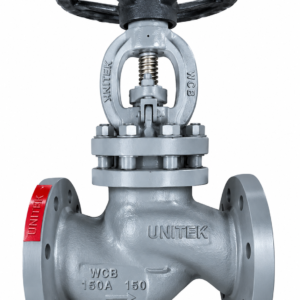
A Flanged IBR Pressure Reducing Valve provides a secure, leak-resistant connection method for heavy industrial pipelines. Flanged connections allow seamless alignment with standard industrial pipe flanges and mating valves.
-
Piping Compatibility: Designed to integrate smoothly into heavy-duty industrial piping layouts.
-
Maintenance Access: Flanges permit straightforward unbolting and removal when major overhauls or periodic inspections of the pipeline are required.
-
Sealing Performance: High-performance gaskets and industrial bolting ensure reliable containment across high-pressure and high-temperature operating ranges.
Pressure Reducing Valve Sizing & Selection
Proper sizing and selection are vital to achieving stable pressure control and preventing issues such as excessive noise, vibration, or premature wear. Procurement and engineering teams should evaluate the following parameters:
-
Inlet / upstream pressure ranges
-
Required outlet / downstream pressure
-
Steam or process fluid medium
-
Flow rate characteristics
-
Operating temperature limits
-
Total pressure differential
-
Nominal valve size (NPS / DN)
-
Valve body and trim material compatibility
-
End connection type and pressure rating
-
Installation site conditions
-
Noise and fluid velocity considerations where applicable
-
Applicable IBR regulatory standards and project specifications
IBR Requirements, Inspection, Testing & Documentation
Compliance and documentation protocols vary based on the specific product design, service application, and contractual project requirements. Depending on order specifications, documentation scope may include:
-
Material test certificates for pressure-retaining components
-
Visual and dimensional inspection reports
-
Pressure testing and performance verification records where specified
-
Valve construction and assembly documentation
-
Third-party inspection coordination, where specified by the client
-
Applicable IBR-related documentation and certification
Important: Compliance with international standards (such as ASME, API, BS, or ASTM) does not automatically confer Indian Boiler Regulations (IBR) approval. IBR applicability, approval, and documentation depend entirely on the specific equipment, application, valve specification, and applicable regulatory or project requirements.
Pressure Reducing Valve vs Pressure Safety Valve
It is vital to clearly distinguish between pressure control devices and overpressure protection devices within an industrial piping system:
-
Pressure Reducing Valve (PRV):
-
Used for normal operating pressure reduction and control.
-
Continuously modulates to maintain required downstream pressure during standard day-to-day operations.
-
Responds dynamically to changing operating conditions and flow demands.
-
-
Pressure Safety Valve (PSV):
-
Used strictly for emergency overpressure protection.
-
Remains closed during normal operation and opens automatically only when applicable set-pressure conditions are reached.
-
Protects equipment and vessels from dangerous overpressurization by discharging excess media.
-
These devices perform entirely different functions and must never be treated as interchangeable.
Benefits of Suitable IBR Pressure Reducing Valves
-
Controlled Downstream Pressure: Maintains a steady, reliable working pressure for downstream machinery regardless of upstream fluctuations.
-
Optimized Steam Distribution: Facilitates efficient steam delivery across varying pressure zones within a facility.
-
Downstream Equipment Protection: Safeguards lower-rated process equipment from excessive upstream pressure during normal operation.
-
Improved Operational Stability: Enhances overall control of steam supply to heat exchangers, coils, and process vessels.
-
Industrial Suitability: Engineered with strong body materials and reliable internal components for demanding steam and utility environments.
IBR Pressure Reducing Valve Manufacturer, Supplier & Exporter in India
UNITEK VALVES is a recognized manufacturer, supplier, and exporter of industrial valves based in Mumbai, India. Serving domestic processing plants and international industrial markets, the company provides dependable flow-control solutions supported by rigorous quality control and material traceability.
The company provides dedicated support for:
-
Technical requirement review and parameter analysis
-
Product selection guidance for industrial steam and boiler applications
-
Inspection and testing coordination
-
Documentation preparation
-
Domestic supply across India and international export enquiries
How to Select the Right IBR Pressure Reducing Valve
Procurement and engineering teams should evaluate system requirements systematically:
-
Define the exact fluid medium and operating phase (saturated or superheated steam).
-
Determine maximum and minimum inlet pressures expected at the valve location.
-
Establish the required downstream control pressure and allowable pressure tolerance.
-
Calculate minimum and maximum flow rates to ensure proper valve sizing.
-
Confirm operating temperature limits to select compatible body and trim metallurgy.
-
Verify pipe size, end connection ratings, and installation orientation constraints.
-
Specify any mandatory third-party inspection or IBR documentation requirements.
Final Enquiry / Call to Action
Submit your technical specifications, piping datasheets, service conditions, required valve details, quantities, and applicable IBR or project requirements to UNITEK VALVES for professional engineering support and commercial quotations on IBR Pressure Reducing Valves.
Only logged in customers who have purchased this product may leave a review.

Reviews
There are no reviews yet.