
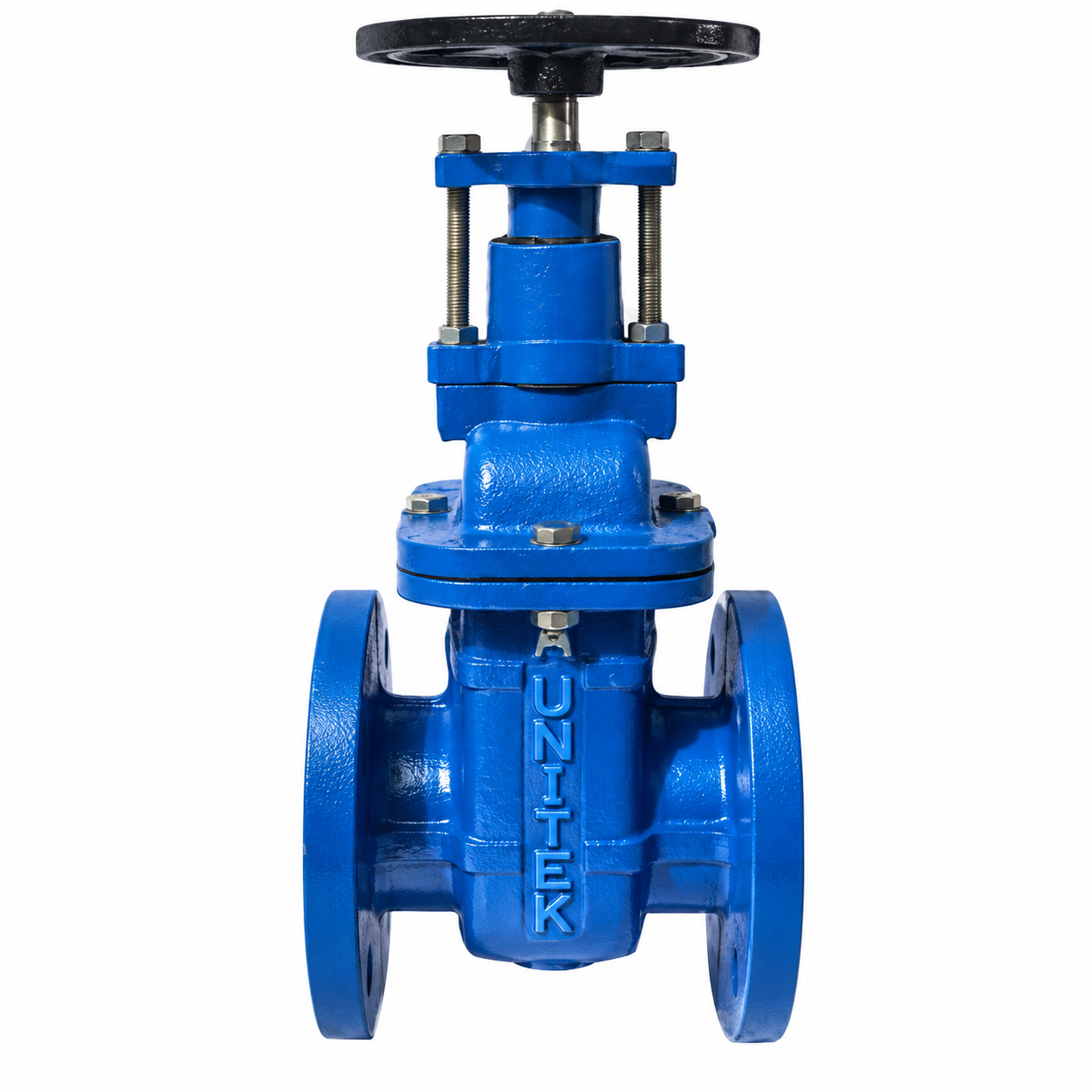
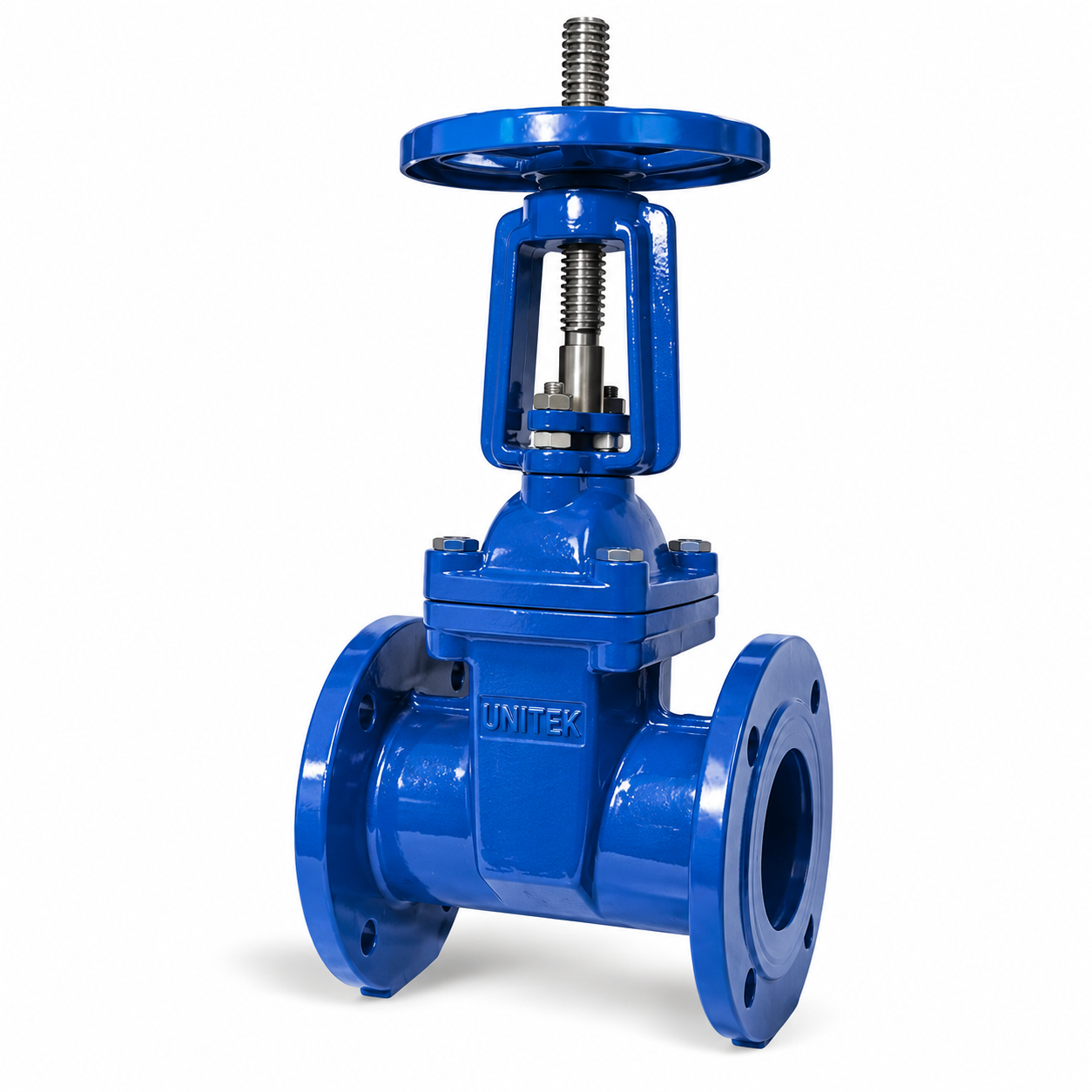
Rising Spindle Gate Valve
Description
Rising Spindle Gate Valves Manufacturer in India
Introduction
In modern industrial, municipal, and utility piping infrastructure, effective flow management and reliable isolation are vital for maintaining system integrity and operational control. Pipeline networks across water treatment facilities, processing plants, and distribution systems rely on proven mechanical devices to shut off or permit fluid flow efficiently. Among various gate-type flow control devices, Rising Spindle Gate Valves play an essential role in providing dependable on-off isolation alongside a clear visual indication of valve operation.
Unitek Valves is an established manufacturer, supplier, and exporter of industrial valves in India, based in Mumbai. Serving domestic and international markets, the company provides robust fluid control solutions engineered to meet the demands of industrial piping, water pipelines, and utility systems. This product page outlines the technical operating principles, structural characteristics, advantages, and application guidelines associated with rising spindle gate valves.
What is a Rising Spindle Gate Valve?
A rising spindle gate valve—commonly referred to as a rising stem gate valve—is a gate-type isolation valve designed primarily to start or stop fluid flow within a pipeline.
The defining characteristic of this design is its stem/spindle arrangement, in which the stem moves vertically upward and downward as the valve is operated. When the handwheel is turned to open the valve, the stem and the attached internal gate travel upward together, extending outward above the operating mechanism. Conversely, closing the valve drives the stem downward into the closed position. This vertical movement provides a direct visual and tactile indication of the valve’s open or closed position, making it a preferred choice in many accessible piping environments.
How Does a Rising Spindle Gate Valve Work?
The operation of a rising spindle gate valve relies on a threaded mechanical connection between the rotating handwheel and the valve stem. The standard operating sequence involves:
-
Closed position: The gate is tightly seated against the body ring seats, completely obstructing the flow path.
-
Handwheel operation: The operator rotates the handwheel in the opening direction.
-
Stem movement: Because the stem is keyed or threaded through the operator hub, rotation causes the stem to travel vertically upward.
-
Gate movement: The gate, secured to the lower end of the stem, lifts in unison with the stem out of the flow path.
-
Opening of flow passage: Continued rotation clears the gate entirely from the waterway, providing an unobstructed flow path with minimal pressure drop.
-
Closing operation: Reversing the handwheel rotation drives the stem and gate downward back into the seated position to isolate the flow.
This mechanical design ensures a positive seal when fully closed, though the valve is strictly intended for on-off isolation service rather than precision flow regulation.
Rising Spindle Gate Valve vs Non-Rising Spindle Gate Valve
When selecting a gate valve configuration for a piping layout, engineers and procurement teams frequently compare rising spindle and non-rising spindle designs. The table below outlines their primary structural and operational differences:
| Feature | Rising Spindle Gate Valve | Non-Rising Spindle Gate Valve |
| Stem movement | The stem moves vertically upward and downward along with the gate during operation. | The stem rotates in place; only the internal gate travels vertically. |
| Visual indication | External stem extension provides a clear visual indicator of the valve’s open/closed position. | Stem position is not visibly indicated by external stem extension. |
| Installation clearance | Requires sufficient vertical overhead clearance to accommodate the rising stem. | Requires minimal vertical operating clearance above the handwheel. |
| Operating arrangement | Ideal for above-ground installations where direct position checking is beneficial. | Well-suited for underground, pit, or space-restricted installations. |
| Typical selection consideration | Selected where visual position verification and stem lubrication maintenance access are prioritized. | Selected where spatial economy and protection of stem threads from external elements are required. |
Neither design is universally superior; the choice depends strictly on the physical space constraints, operational protocols, and installation requirements of the project.
Main Components of a Rising Spindle Gate Valve
A standard rising spindle gate valve is constructed from several core structural elements:
-
Body: The primary pressure-containing outer casting that houses internal flow paths and connects to pipeline flanges.
-
Bonnet: The upper cover secured to the body that encloses the stem assembly and packing components.
-
Gate: The internal closure wedge that moves vertically across the flow path to isolate media.
-
Rising stem/spindle: The threaded shaft that transmits operating torque and lifts the gate.
-
Seat: The precision-machined sealing faces on the body and gate ensuring a tight shut-off.
-
Handwheel / Operator: The manual interface (or mechanical gear operator) used to turn the stem assembly.
-
Packing arrangement: The sealing material housed in the stuffing box preventing leakage around the stem.
Features of Rising Spindle Gate Valves
Rising spindle gate valves incorporate several practical engineering features designed to support reliable pipeline operation:
-
Rising spindle arrangement providing straightforward mechanical action.
-
Visible stem movement allowing quick visual verification of valve status.
-
Isolation-oriented design optimized for dependable on-off service.
-
Manual operation where applicable, with provisions for gearboxes or actuators based on size and operational needs.
-
Suitable configurations tailored to diverse piping requirements.
-
Availability with suitable end connections matching specific pipeline standards.
Advantages of Rising Spindle Gate Valves
The rising stem design offers several practical advantages in industrial and utility piping environments:
-
Visible indication of stem position, enabling operators to assess valve status at a glance.
-
Familiar operating arrangement making maintenance and manual handling straightforward for plant personnel.
-
Suitable for applications where stem position visibility is useful, such as in above-ground manifolds and pump houses.
-
Reliable isolation when properly selected, installed, and operated.
-
Established gate valve operating principle backed by long-standing industrial utility.
Applications of Rising Spindle Gate Valves
Rising spindle gate valves are deployed across a broad range of liquid handling and utility networks. Suitable application areas include:
-
Water supply systems
-
Water distribution networks
-
Water treatment facilities
-
Municipal water infrastructure
-
Industrial water pipelines
-
Utility piping networks
-
Pumping systems
-
Industrial piping layouts
Actual suitability depends heavily on the specific fluid medium, operating pressure, temperature limits, and project engineering parameters.
Cast Iron Rising Spindle Gate Valve
While rising spindle gate valves can be engineered from various metal alloys, cast iron is widely utilized for water supply, sewage, and general utility services due to its compressive strength and cost-effective structural rigidity.
It is important to note that not every rising spindle gate valve is manufactured from cast iron. Where cast iron construction is specified for water or utility applications, the actual material grade, internal trim specifications, and protective coating requirements must be confirmed against the specific project datasheet.
Flanged Rising Spindle Gate Valve
In industrial and municipal piping systems, joint integrity and alignment are critical. Many rising spindle gate valves are supplied with flanged end connections.
Flanged connections offer practical benefits such as:
-
Secure, rigid mechanical joint strength capable of handling pipeline stresses in larger nominal sizes.
-
Easier alignment and bolting during initial installation.
-
Enhanced accessibility for periodic inspection, maintenance, or valve replacement without requiring destructive cutting of the pipeline.
Rising Spindle Gate Valve Selection
Engineers, consultants, and procurement teams must evaluate multiple parameters to select the correct valve for an installation:
-
Valve size matching pipeline dimensions.
-
Pipeline size and layout parameters.
-
Medium characteristics (e.g., raw water, treated water, utility fluid).
-
Operating pressure limits of the system.
-
Operating temperature ranges.
-
Material specifications appropriate for the fluid.
-
End connection type (e.g., flanged).
-
Installation space availability, including vertical clearance for the rising stem.
-
Operating method (manual handwheel, gearbox, or actuation).
-
Installation orientation requirements.
-
Project specifications and applicable engineering standards.
Final specifications must always be verified prior to equipment procurement.
Rising Spindle Gate Valve Manufacturer, Supplier & Exporter in India
Unitek Valves operates as a trusted manufacturer, supplier, and exporter of industrial valves in India, based in Mumbai. The company serves a diverse clientele including industrial customers, EPC contractors, engineering consultants, and procurement teams.
Unitek Valves supports complex infrastructure and industrial projects through:
-
Detailed technical requirement reviews.
-
Application-based product selection guidance.
-
Comprehensive domestic and export supply operations.
-
Professional customer support for industrial valve procurement.
Why Choose Unitek Valves for Rising Spindle Gate Valves?
Procuring critical flow control equipment requires partnering with an established manufacturer capable of meeting rigorous technical standards. Sourcing from Unitek Valves offers distinct engineering and commercial advantages:
-
Industrial valve expertise backed by extensive manufacturing and supply experience.
-
Application-based selection ensuring equipment matches operational duties.
-
Technical requirement review by experienced professionals.
-
Product configuration support tailored to specific piping layouts.
-
Project-specific requirements accommodation.
-
Domestic and export supply capabilities ensuring reliable logistics.
Rising Spindle Gate Valves for Water & Industrial Piping
Within water treatment, utility networks, and general industrial piping, rising spindle gate valves are selected primarily for appropriate isolation duties. Because gate valves are designed for full-open or full-tight shut-off service, they should not be utilized for continuous throttling or flow regulation, as partial opening can cause high fluid turbulence and premature wear on seating surfaces. Proper integration requires verifying that operating conditions align with the valve’s design parameters.
Operating & Maintenance Considerations
To ensure safe operation and dependable service life, operators should observe standard engineering practices:
-
Operate the valve strictly according to its intended design parameters.
-
Avoid using excessive leverage or forcing the handwheel beyond its normal travel limits.
-
Keep the stem and operating area clean and accessible for visual inspection and lubrication.
-
Inspect the valve regularly for visible signs of leakage around the stem packing or flange joints.
-
Check packing and sealing arrangements routinely to address minor wear.
-
Follow the manufacturer’s specific operation and maintenance instructions.
Contact Unitek Valves—your trusted Rising Spindle Valve Manufacturer in India based in Mumbai, India—to discuss your pipeline requirements today.
Only logged in customers who have purchased this product may leave a review.

Reviews
There are no reviews yet.