
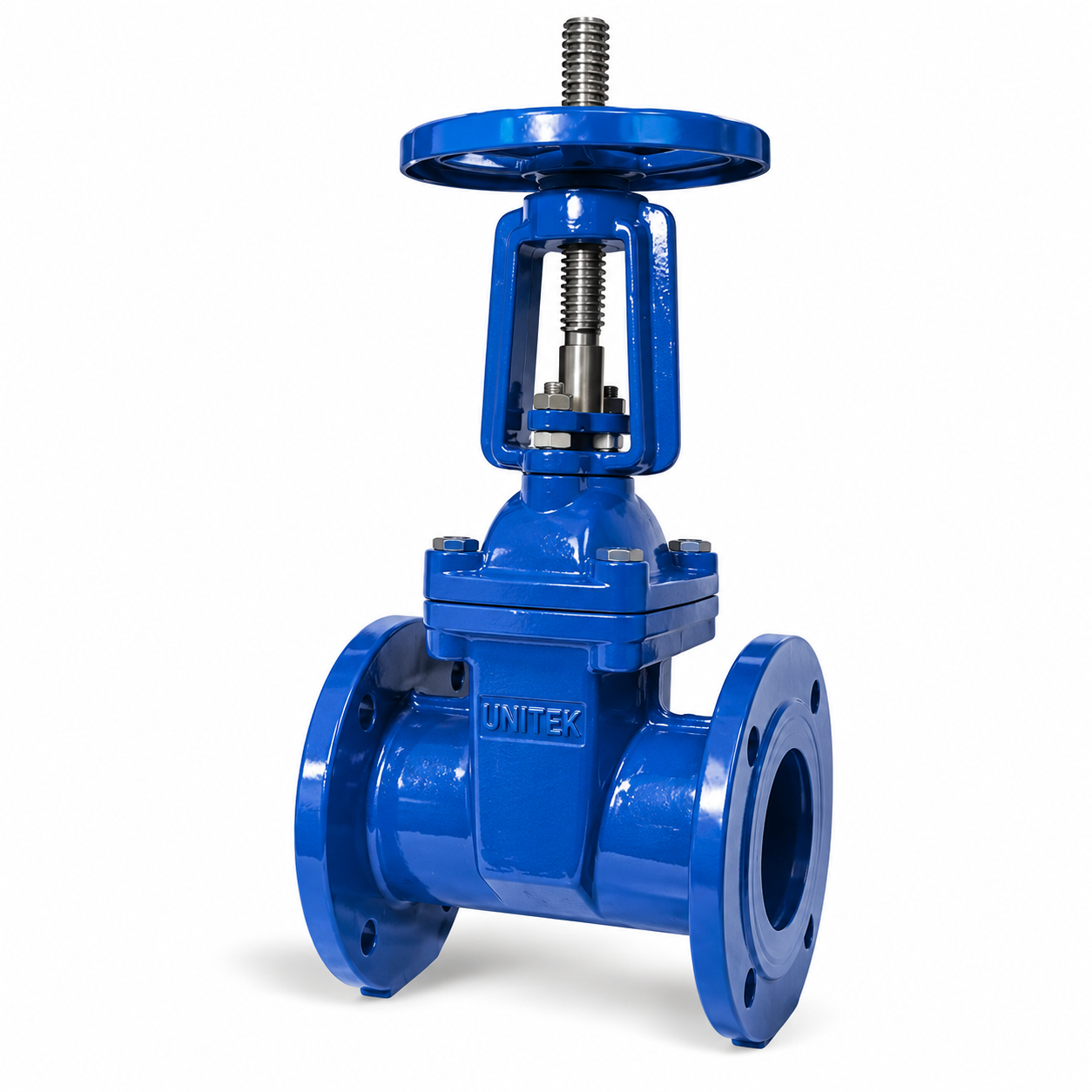
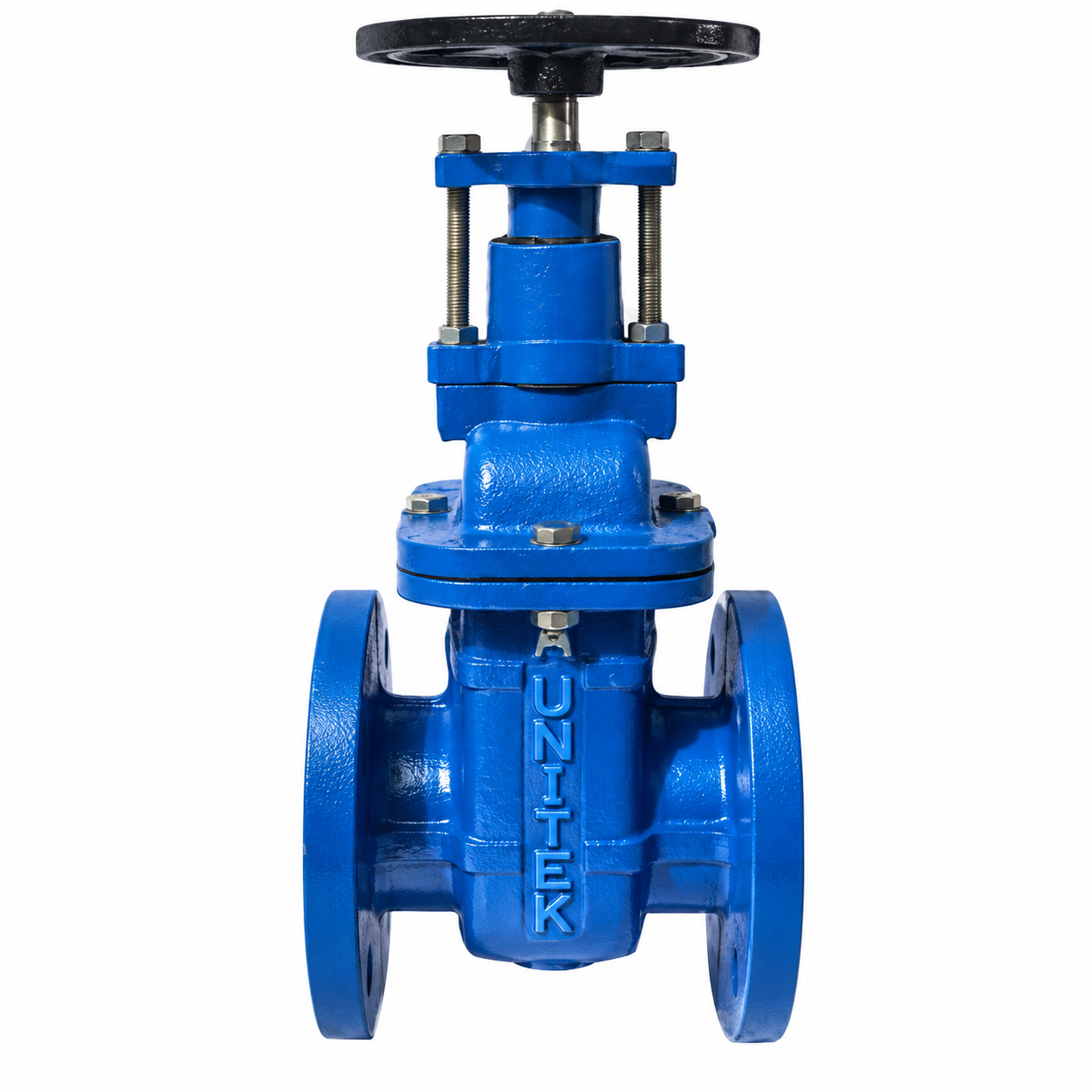
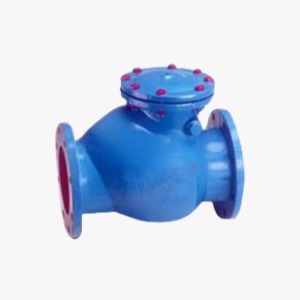
Non Rising Sluice Gate Valve
Description
Non Rising Sluice Gate Valve Manufacturer in India
Gate valves are widely used in pipeline systems where reliable flow isolation is required during operation, maintenance, inspection, or equipment shutdown. A Non Rising Sluice Gate Valve is a gate-type isolation valve designed with a non-rising stem or spindle arrangement, in which the stem does not move vertically upward outside the valve as the valve is operated. Instead, the gate moves along the internally threaded stem arrangement according to the specific valve design.
This operating arrangement can be useful where the available vertical space above the valve is limited or where a compact external operating profile is preferred. Non-rising gate valves can be considered for appropriate water pipelines, utility systems, industrial piping, pumping systems, and water infrastructure where their configuration and materials are suitable for the service.
Unitek Valves is a manufacturer, supplier and exporter of industrial valves in India, based in Mumbai. We support industrial customers, EPC contractors, engineering consultants and procurement teams with valve requirements for water, utility and industrial piping applications.
What is a Non Rising Sluice Gate Valve?
A Non Rising Sluice Gate Valve is a gate valve primarily used to start or stop the flow of a fluid through a pipeline. Like other gate valves, it uses a gate element that moves into or out of the flow passage to provide an isolation function.
The defining characteristic is its non-rising stem arrangement.
In a non-rising configuration, the operating stem or spindle rotates while remaining within the valve’s operating arrangement rather than extending vertically upward as the valve is opened. The gate is mechanically engaged with the threaded stem arrangement and moves in response to the stem’s rotation.
The basic arrangement can be understood as follows:
- The handwheel or operator provides the operating input.
- The stem/spindle transfers the rotational movement.
- The threaded stem arrangement interacts with the gate.
- The gate moves to open or close the flow passage.
- The valve provides an isolation function when fully opened or closed.
The precise internal construction can vary according to the particular valve design and specification.
A Non-Rising Gate Valve is therefore not defined simply by its body material or end connection. The term specifically describes the operating arrangement of the stem/spindle.
How Does a Non Rising Sluice Gate Valve Work?
The operating principle is based on rotational movement of the stem and corresponding movement of the gate.
1. Valve closed
When the valve is closed, the gate occupies the flow-passage area and restricts flow through the valve.
2. Handwheel or operator is turned
The operator rotates the handwheel or other operating mechanism in the required direction.
3. Stem rotates
The stem or spindle rotates within the valve’s operating arrangement. Unlike a rising spindle design, the stem does not progressively extend upward outside the valve during normal operation.
4. Gate moves
Through the threaded engagement between the stem arrangement and gate, the gate moves according to the valve’s internal design.
5. Flow passage opens
As the gate moves away from the flow passage, the opening increases and the pipeline can pass the fluid.
6. Gate moves toward the closed position
When the operator is turned in the opposite direction, the gate travels back toward the closed position until the intended isolation condition is achieved.
The exact mechanism, component arrangement and method of gate engagement depend on the particular Non Rising Sluice Gate Valve design. Therefore, detailed construction should always be confirmed against the manufacturer’s technical specification.
Non Rising vs Rising Spindle Gate Valve
Both non-rising and rising spindle gate valves are used for pipeline isolation. Their main difference is the way the operating stem behaves during opening and closing.
| Feature | Non Rising Sluice Gate Valve | Rising Spindle Gate Valve |
|---|---|---|
| Stem movement | Stem rotates without progressively rising externally | Stem rises and lowers during operation |
| External stem position | Stem position may not directly indicate gate position | Stem position can provide a visible indication of movement |
| Installation clearance | Generally useful where vertical clearance is a consideration | Requires allowance for external stem movement |
| Operating arrangement | Stem remains within the valve’s operating arrangement | Stem extends vertically as the valve operates |
| Selection consideration | Useful where compact external operating space is required | Useful where visible stem movement is desirable |
Neither arrangement is universally preferable. Selection should be based on installation space, operating requirements, valve configuration, maintenance access and project specifications.
Key Components of a Non Rising Sluice Gate Valve
The exact construction depends on the valve specification, but a typical Non Rising Gate Valve may include the following major components.
Body
The valve body forms the main pressure-containing structure and houses the gate, seats and associated internal components.
Bonnet
The bonnet is fitted to the valve body and provides access to the internal operating components. Its arrangement depends on the valve design.
Gate
The gate is the primary closure element. It moves into or away from the flow passage as the valve is operated.
Stem / Spindle
The stem, also called the spindle, transmits operating movement from the handwheel or actuator to the gate. In a non-rising arrangement, the stem does not rise vertically outside the valve during operation.
Seat
The seats provide the interface between the gate and valve body flow path when the valve is brought toward the closed position. The seat configuration and material depend on the specified valve design.
Handwheel / Operator
The handwheel or operating mechanism allows manual operation where the valve is designed for manual service.
Packing Arrangement
The packing arrangement provides sealing around the stem where applicable and helps control leakage from the valve’s operating area.
Features of Non Rising Sluice Gate Valve
Depending on the specific configuration, a Non Rising Sluice Gate Valve may provide several practical design characteristics:
- Non-rising stem or spindle arrangement
- Gate-type isolation mechanism
- Compact external operating profile
- Suitable for selected water and utility applications
- Manual operation where specified
- Different configurations according to project requirements
- End connections selected according to the valve design
- Application-specific material configurations
The actual construction and available features should always be confirmed from the individual valve specification rather than assumed from the general product name.
Advantages of Non Rising Sluice Gate Valve
The non-rising arrangement offers practical considerations for certain pipeline installations.
Reduced vertical stem movement
Because the stem does not progressively extend vertically outside the valve, the operating arrangement can be useful in installations where vertical clearance is limited.
Compact external profile
The absence of an externally rising spindle can simplify installation planning where equipment, structures or other piping components are located above the valve.
Clear isolation function
The gate mechanism is intended primarily for opening and closing the pipeline rather than precision flow regulation.
Familiar operating principle
Gate valves use a well-established isolation principle in pipeline systems, making them familiar to plant engineers, maintenance personnel and valve procurement teams.
Suitable for established pipeline configurations
Depending on the service and specification, non-rising configurations can be considered for water, utility and selected industrial piping systems.
Applications of Non Rising Sluice Gate Valve
A Non Rising Sluice Gate Valve can be considered for various applications where pipeline isolation is required and the valve’s construction is appropriate for the service.
Common application areas include:
- Water supply pipelines
- Water distribution systems
- Water treatment plants
- Municipal water infrastructure
- Industrial water pipelines
- Utility piping
- Pumping systems
- General industrial piping
- Process utility services
- Water infrastructure projects
The valve should not be treated as universally compatible with every fluid or operating condition. Actual suitability depends on factors such as fluid characteristics, pressure, temperature, material compatibility, installation conditions and project requirements.
Non Rising Sluice Gate Valve for Water Supply
Water pipeline systems frequently require valves at strategic points for isolation, maintenance and system control. A Non Rising Gate Valve for Water can be considered where a suitable non-rising configuration is required for the pipeline installation.
Potential applications include:
- Water distribution networks
- Water treatment systems
- Pumping stations
- Utility pipelines
- Industrial water systems
- Municipal water infrastructure
- Pipeline isolation points
The non-rising arrangement can be particularly relevant where the installation has limited vertical space above the valve. However, the valve’s material configuration, pressure capability, connection arrangement and compatibility with the water service must be confirmed before selection.
For this reason, a Sluice Gate Valve for Water Supply should be specified according to the actual operating conditions rather than selected solely by valve type.
Cast Iron Non Rising Sluice Gate Valve
A Cast Iron Non Rising Sluice Gate Valve combines two separate aspects of valve specification: the non-rising operating arrangement and a cast iron construction.
The term non-rising describes the stem/spindle arrangement. Cast iron describes the material configuration. These characteristics should not be treated as interchangeable.
Not every Non Rising Sluice Gate Valve is necessarily manufactured from cast iron. The actual body, bonnet, gate, stem, seating components and other materials must be confirmed against the specific product specification.
Where cast iron construction is specified, it may be considered for appropriate water and utility applications depending on the required operating conditions and material compatibility.
For procurement, buyers should confirm:
- Required material configuration
- Fluid or water service
- Operating pressure
- Operating temperature
- Valve size
- End connection
- Applicable project requirements
This approach helps ensure that the Cast Iron Gate Valve configuration corresponds to the actual application.
Flanged Non Rising Sluice Gate Valve
A Flanged Non Rising Sluice Gate Valve uses flanged end connections where specified by the valve design and pipeline requirement.
Flanged connections can provide a practical method of installing and subsequently removing a valve from a pipeline, subject to the selected connection design and project requirements.
During installation, engineers and maintenance teams should consider:
- Pipeline alignment
- Available installation space
- Access for operation
- Access for maintenance
- Compatibility between valve and pipeline connections
- Gasket and bolting requirements
- Applicable project specifications
Flange dimensions, drilling patterns and applicable standards should not be assumed from the general product description and should instead be confirmed from the specific valve datasheet or technical offer.
Non Rising Sluice Gate Valve Selection
Selecting the correct Non Rising Sluice Gate Valve requires more than identifying the required valve type. Engineering and procurement teams should review the complete service conditions.
Important selection factors include:
- Nominal valve size and pipeline size
- Fluid or medium
- Operating pressure
- Operating temperature
- Required isolation function
- Valve body and component materials
- End connection
- Available installation space
- Operating arrangement
- Installation orientation
- Project specifications
- Applicable standards, where specified
For example, a valve intended for a municipal water pipeline may have different requirements from a valve installed in an industrial process utility system.
The final valve configuration should therefore be confirmed against the project’s technical requirements before ordering.
Non Rising Sluice Gate Valve Manufacturer, Supplier & Exporter in India
Unitek Valves is a Non Rising Sluice Gate Valve manufacturer, supplier and exporter in India, based in Mumbai.
We support valve requirements for customers involved in industrial piping, water infrastructure, utility systems and related engineering projects.
Our business support can serve:
- Industrial customers
- EPC contractors
- Engineering consultants
- Procurement departments
- Maintenance teams
- Water infrastructure companies
- Domestic customers across India
- Export customers
For enquiries involving a Non Rising Sluice Gate Valve Supplier in India or Non Rising Sluice Gate Valve Exporter in India, the valve configuration can be reviewed according to the intended application and technical requirements.
Why Choose Unitek Valves for Non Rising Sluice Gate Valves?
Unitek Valves approaches industrial valve supply around the technical requirements of the application rather than relying only on a generic valve description.
Key areas of support include:
- Industrial valve expertise
- Application-based valve selection
- Multiple valve configurations
- Review of technical requirements
- Project-specific requirements
- Domestic and export supply
- Commercial and technical customer support
Whether the requirement is for a Non Rising Sluice Gate Valve Mumbai project, an Indian industrial installation or an export requirement, the appropriate valve configuration should be established from the actual service conditions and project specifications.
Non Rising Sluice Gate Valve for Industrial Piping
In industrial piping systems, gate valves are primarily selected when the requirement is pipeline isolation. They are generally not intended to function as precision throttling valves.
A Non Rising Sluice Gate Valve can be considered for appropriate industrial water lines, utility services and other compatible piping applications where an isolation valve is required.
Engineers should consider the complete operating environment, including:
- Fluid characteristics
- Pressure
- Temperature
- Material compatibility
- Required valve size
- Connection arrangement
- Installation limitations
- Operating frequency
- Project standards and specifications
Correct application-based selection is important for achieving the intended valve function within the piping system.
Maintenance & Operating Considerations
Proper operation and maintenance should follow the manufacturer’s instructions and the specific valve design.
General considerations include:
- Operate the valve according to its intended design.
- Avoid forcing the handwheel or operating mechanism.
- Inspect the valve for visible leakage.
- Check operating components where applicable.
- Maintain suitable access around the valve for operation and inspection.
- Inspect packing or sealing arrangements where applicable.
- Follow the manufacturer’s maintenance instructions.
- Investigate abnormal operating resistance rather than applying excessive force.
Maintenance requirements can vary according to the valve construction, service conditions and operating environment. A project-specific maintenance procedure should therefore be based on the applicable manufacturer documentation.
Non Rising Sluice Gate Valve — Enquire with Unitek Valves
If you are looking for a Non Rising Sluice Gate Valve Manufacturer in India, Unitek Valves can review your requirement and help identify an appropriate valve configuration for the intended service.
For a technical or commercial enquiry, provide details such as:
- Valve type
- Nominal size
- Fluid/medium
- Operating pressure
- Operating temperature
- Material requirement
- End connection
- Quantity
- Project/application details
Providing these details allows the valve configuration to be evaluated against the actual pipeline and operating conditions.
Contact Unitek Valves for Non Rising Sluice Gate Valve requirements for water pipelines, utility systems and industrial piping applications.
Unitek Valves — Non Rising Sluice Gate Valve Manufacturer in India, Mumbai, India.
Only logged in customers who have purchased this product may leave a review.

Reviews
There are no reviews yet.