
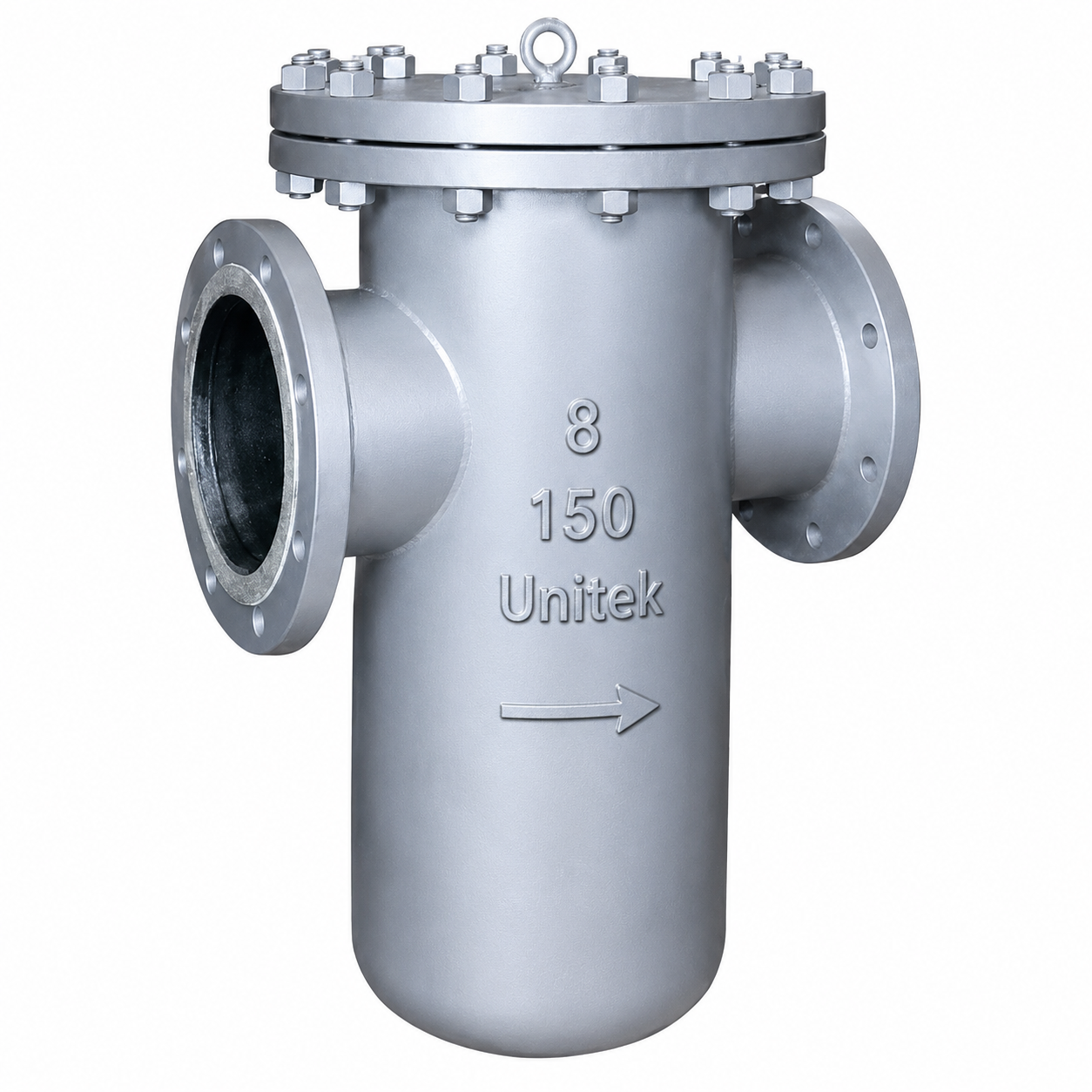
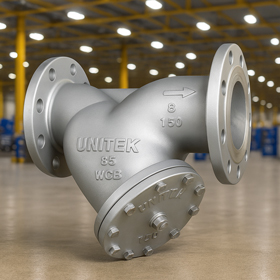
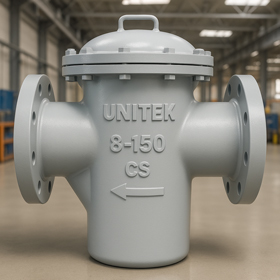
Pot Type IBR Strainer
UNITEK VALVES PVT LTD is a recognized manufacturer, supplier, and exporter of industrial valves and flow-control products based in Mumbai, India. Serving domestic processing plants and international industrial markets, the company provides dependable pipeline solutions supported by rigorous quality control and material traceability. Alongside pot strainers, the product portfolio includes industrial gate, globe, check, safety, and control valves tailored for demanding steam and process applications.
Description
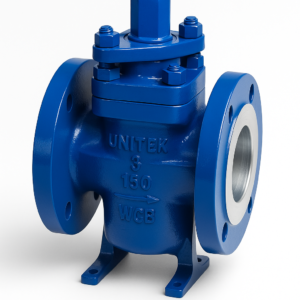
Pot Type IBR Strainer Manufacturer in India
A Pot Type IBR Strainer is an essential industrial filtration device engineered to remove unwanted solid particles, debris, welding scale, and foreign matter from flowing media within high-demand piping systems. Designed with a robust, pot-shaped internal settling chamber and a removable filtering basket, these industrial strainers protect downstream equipment—such as control valves, steam traps, pumps, meters, and heat exchangers—from particulate-induced wear and mechanical jamming.
In steam distribution, boiler feedwater loops, thermal power plants, and process industries, reliable pipeline filtration is critical for operational efficiency. Unitek Valves operates as a trusted manufacturer, supplier, and exporter of industrial valves and flow-control products in India, supplying heavy-duty filtration solutions for domestic industrial hubs and international export markets.
What is a Pot Type IBR Strainer?
A Pot Type Strainer is a static inline mechanical filtration unit designed to retain solid debris carried along by the working fluid.
-
The Pot-Shaped Body: The enlarged cylindrical housing acts as a settling chamber, accommodating larger debris volumes before they reach the filtration screen.
-
Internal Filtering Element: A perforated metal basket or mesh-lined element that catches suspended particulate matter.
-
Equipment Protection: By capturing stray particles before they travel further downstream, the strainer shields precision devices from scoring, erosion, and jamming.
-
Industrial Integration: These units are integrated into horizontal or vertical pipelines using flanged or welded connections, depending on the piping class.
-
Service Accessibility: The top cover can be unbolted to provide direct access to the internal basket without disturbing main pipeline alignment.
A pot strainer is a mechanical filtration device; it is not a shut-off valve, does not regulate or control pressure, and does not replace valves or pressure-reducing regulators.
How Does a Pot Type Strainer Work?
The operational mechanism of an IBR Pot Strainer relies on fluid dynamics and mechanical screening:
-
Fluid Entry: The process fluid or steam enters the pot strainer body inlet under system operating pressure.
-
Settling & Filtration: As the fluid enters the enlarged pot cavity, heavier solid particles drop toward the bottom of the chamber. The flow then passes through the internal perforated basket, trapping remaining suspended debris.
-
Downstream Discharge: Cleaned fluid exits through the outlet connection toward downstream equipment.
-
Differential Pressure Monitoring: As solid debris accumulates within the basket, the differential pressure between the inlet and outlet increases. Monitoring this pressure drop helps maintenance teams determine when cleaning is necessary.
-
Element Servicing: Once isolated and depressurized according to proper plant safety protocols, the cover can be opened to remove, empty, and clean the internal basket.
Note: Pot strainers do not provide 100% particulate removal, do not feature zero pressure drop, and require routine maintenance.
Pot Type IBR Strainer Design & Construction
A robust structural design ensures that the strainer body and internal components withstand demanding pressure and thermal loads. Typical construction features include:
-
Strainer Body: A heavy-duty cast, forged, or fabricated pot-shaped shell designed to accommodate the internal basket and handle system pipeline forces.
-
Removable Basket: A perforated metal sheet or wire mesh-lined element configured for straightforward lifting and cleaning.
-
Cover / Closure: A bolted top cover providing direct access to the internal filtration chamber.
-
Cover Gasket & Fasteners: High-integrity sealing elements and heavy-duty industrial bolting to prevent leakage under pressure.
-
Drain Connection: A bottom drain or blow-off tapping (often fitted with a small valve or plug) to allow accumulated sediment to be flushed out where specified.
-
Vent Connection: An upper vent tapping where specified, useful for releasing trapped air or steam during commissioning.
-
End Connections: Flanged end connections designed to match standard industrial piping classes.
Exact dimensions, wall thicknesses, mesh openings, and structural configurations depend strictly on the specific design, operating conditions, and project specification.
Pot Type IBR Strainer for Steam & Boiler Applications
Steam distribution and boiler networks operate under elevated temperatures and pressures, making reliable fluid filtration a critical factor for plant safety and longevity. A Pot Type Steam Strainer or Boiler Strainer is frequently installed in steam loops to capture loose pipe scale, welding residue, and mineral debris.
Suitable applications include:
-
Steam pipelines and distribution headers
-
Boiler piping and feedwater loops
-
Main and auxiliary steam systems
-
Industrial steam utility networks
-
Power generation systems
-
Thermal power plant auxiliary lines
-
Process steam systems
By capturing abrasive particulate matter, these strainers help protect downstream components such as control valves, steam traps, pumps, flow meters, heat exchangers, and turbine equipment from premature wear.
Pot Type IBR Strainer for Power Plants & Industrial Piping
Heavy industrial facilities and power generation complexes handle massive fluid volumes where equipment reliability is paramount. An IBR Pot Strainer for Power Plant and industrial utility service plays an indispensable role in maintaining clean piping circuits.
Key industries utilizing these devices include:
-
Power generation stations
-
Thermal power plants
-
Refineries and petrochemical units
-
Chemical processing plants
-
Fertilizer manufacturing units
-
General industrial utility networks
In these environments, selecting the appropriate strainer configuration ensures that heavy particulate loads do not disrupt continuous plant operations.
Pot Type IBR Strainer Materials
Material selection for an industrial strainer is governed by the working fluid, operating temperature, pressure class, and corrosive nature of the environment. Possible materials include, where applicable:
-
Carbon Steel / Cast Steel: Widely specified for general steam, water, and non-corrosive industrial utility lines.
-
Alloy Steel: Utilized in high-temperature steam services requiring enhanced creep resistance and mechanical strength.
-
Stainless Steel: Selected for corrosive chemical process environments or high-purity utility loops.
The actual material grade and internal mesh metallurgy are determined by the piping specification, operating pressure, temperature limits, and project requirements.
Flanged Pot Type IBR Strainer
A Flanged Pot Strainer provides a secure, leak-resistant connection method for heavy industrial pipelines.
-
Piping Compatibility: Flanged ends allow seamless alignment with standard industrial pipe flanges and mating valves.
-
Maintenance Access: Flanges permit straightforward unbolting of the strainer body when major overhauls or deep cleaning of internal piping lines are required.
-
Gasket Sealing: High-performance gaskets ensure reliable sealing across high-pressure and high-temperature operating ranges.
Pot Type Strainer Maintenance & Cleaning
To maintain optimal filtration performance, routine maintenance procedures should be observed:
-
Periodic Inspection: Check the condition of the internal basket according to operating experience and service conditions.
-
Pressure Drop Monitoring: Track differential pressure across the strainer to identify when the basket has accumulated significant debris.
-
Safe Isolation: Always isolate, vent, and fully depressurize the strainer section following site safety protocols before attempting maintenance.
-
Cover Removal: Open the cover assembly following the manufacturer’s instructions.
-
Element Servicing: Lift out the basket, remove trapped debris by washing or brushing, and inspect the screen for signs of wear, tearing, or structural damage.
-
Reassembly: Inspect sealing surfaces, replace worn gaskets if necessary, reinstall the basket correctly, and secure the cover before restoring system pressure.
Inspection, Testing & IBR Documentation
Inspection and documentation protocols vary based on the specific product design, service application, and contractual project specifications. Depending on the order requirements, scope may include:
-
Material Test Certificates (MTCs) for pressure-retaining components
-
Visual and dimensional inspection
-
Hydrostatic pressure testing of the strainer body where specified
-
Internal basket and mesh verification
-
Welding inspection records where applicable
-
Third-party inspection coordination, where specified by the client
-
IBR-related documentation and certification, where applicable under statutory regulations
Important: Compliance with international standards (such as ASME, ASTM, API, or BS) does not automatically confer Indian Boiler Regulations (IBR) approval. IBR-related documentation and inspection requirements must be explicitly specified and evaluated according to applicable regulatory standards.
Benefits of Pot Type IBR Strainers
-
Enlarged Settling Chamber: Pot-shaped body design allows heavier debris to settle before reaching the fine filtration mesh.
-
Downstream Protection: Effectively captures solid debris to safeguard precision valves, steam traps, and pumps.
-
Removable Filtration Element: Internal basket configuration allows straightforward extraction for cleaning and maintenance.
-
Robust Construction: Engineered with strong body shells and reliable sealing arrangements for industrial environments.
-
Versatile Application: Suitable for diverse steam, boiler, water, and process piping installations.
How to Select a Pot Type IBR Strainer
Choosing the correct strainer requires a thorough review of operating parameters:
-
Fluid Medium: Identify whether the service involves steam, boiler feedwater, cooling water, or process liquids.
-
Operating Pressure & Temperature: Verify that the pressure-temperature rating of the body material matches system limits.
-
Pipe Size & Flow Rate: Match the nominal pipe size and evaluate flow capacity to keep pressure drop within acceptable limits.
-
Filtration Requirements: Determine the required basket perforation size or mesh rating.
-
Body & Basket Material: Select compatible metallurgy for the shell and internal basket.
-
End Connections: Confirm flanged connection ratings matching the existing piping specifications.
-
Maintenance Orientation: Ensure adequate physical clearance around the unit for cover removal and basket extraction.
-
Regulatory Compliance: Verify whether IBR documentation, third-party inspection, or special test certificates are required.
Final Enquiry / Call to Action
Submit your technical specifications, piping datasheets, or project enquiries to UNITEK VALVES PVT LTD for professional engineering support and commercial quotations on Pot Type IBR Strainers and industrial flow equipment.
| Size Range | M.O.C. Housing |
| Casted NB ½ “to 1 ½” Screwed, BW, SW | Casted C.I./C.S./S.S./G.M. |
| NB ½” to 8″ Flanged | Fabricated M.S./S.S/P.P. Fiber/others on request |
| Fabricated NB ½” to 4″ Screwed | Element SS 304/SS, 316/Brass, Paper, Sintered, |
| NB 1″ to 60″ Flanged | Inorganic Glass Fiber, Monel Metal, Hest Alloy, Ceramic, PP, Nylon, String Wound, Polyester. |
Only logged in customers who have purchased this product may leave a review.

Reviews
There are no reviews yet.