
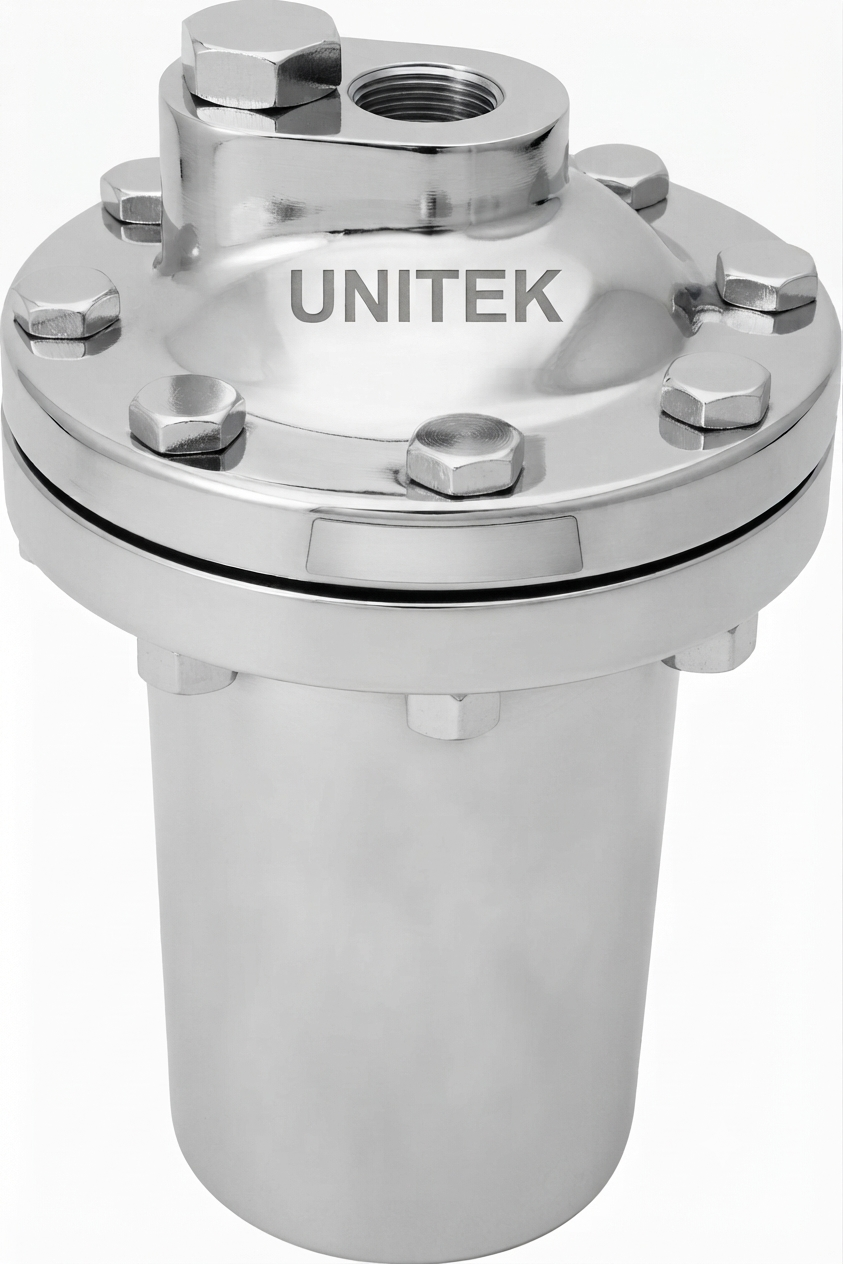
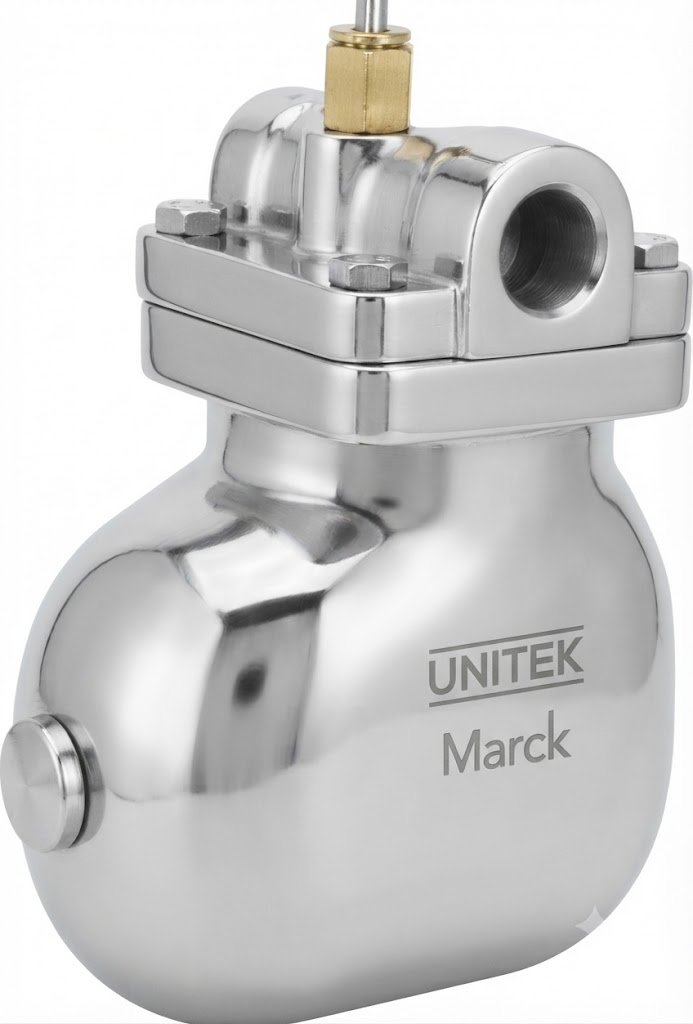
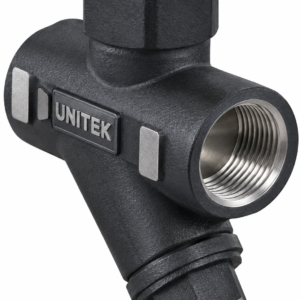
BALL FLOAT TYPE STEAM TRAP
Product Description
| Body : | ASTM A 216 Gr WCB |
| Trims : | 13 Cr Steel (SS 410) |
| Cover : | CAST IRON (IS 210 Gr FG 200) |
| Max Inlet Pressure : | 10.54 Kg/Cm ² AT 220 °C |
| MFG STD : | IS 12268 |
| INSP & TEST STD : | IS 12268 |
| Ends : | SCREWED TO BSP |
| HYD Test Pressure : | BODY : 300 Psig (21 Kg/Cm ²) |
| Size Range : | 15 MM TO 50 MM |
Description
Ball Float Steam Trap Manufacturer in India
Efficient thermal management and condensate drainage are critical for maintaining energy efficiency and reliable operation across modern industrial heating networks. In process industries, thermal plants, and boiler auxiliary setups, steam transfers latent heat to equipment and continuously converts into liquid condensate. A Ball Float Steam Trap provides continuous condensate removal and responsive mechanical control, ensuring that condensate is drained promptly while preventing unnecessary steam loss.
Unitek Valves operates as a premier manufacturer, supplier, and exporter of industrial valves and steam-system products in India, based in Mumbai. Serving domestic processing plants and international industrial markets, the company delivers dependable pipeline and condensate management solutions supported by rigorous quality control and material traceability.
What is a Ball Float Steam Trap?
A Ball Float Steam Trap is a specialized mechanical automatic valve engineered to drain condensate from steam systems continuously and in proportion to the rate of formation.
Unlike thermodynamic traps that cycle intermittently or thermostatic traps that rely on temperature lag, a mechanical float trap operates on the difference in density between steam and condensate. Inside the valve body, a precision-engineered hollow sphere—the ball float—rises and falls according to the internal condensate level, directly driving a valve mechanism to regulate discharge flow.
Working Principle of Ball Float Steam Trap
The operational cycle of a Ball Float Steam Trap relies on fluid dynamics and mechanical buoyancy:
-
Condensate Entry: Steam and condensate enter the trap body through the inlet connection.
-
Accumulation of Liquid: Condensate flows into the internal body chamber, causing the liquid level to rise.
-
Float Elevation: As the condensate level increases, the ball float rises with the liquid due to buoyancy.
-
Valve Opening: The upward movement of the float mechanically operates the discharge valve, opening the port.
-
Continuous Discharge: Condensate is continuously discharged through the outlet as long as liquid flows into the trap.
-
Level Reduction: As incoming condensate slows down, the liquid level inside the body falls.
-
Float Descent: The ball float moves downward, adjusting or closing the valve mechanism.
-
Steam Retention: When steam reaches the trap, the lower liquid level seats the valve, helping prevent unnecessary live-steam loss.
Depending on the specific model design, an integrated thermostatic air vent or air-release mechanism handles air and non-condensable gases during startup and operation.
Construction of Ball Float Steam Trap
A robust structural design enables the trap assembly to withstand demanding thermal cycles and operating pressures. Standard structural components include:
-
Body: Encloses internal components and provides inlet and outlet flow paths.
-
Cover (Cap): Secures access to the internal working mechanism.
-
Float: A hollow stainless steel or corrosion-resistant ball float that provides buoyancy.
-
Valve and Seat: Mating components engineered for tight shut-off and precise flow control.
-
Lever/Linkage Mechanism: Transmits the vertical motion of the float to the valve plug.
-
Air Vent / Thermostatic Air Vent: Where incorporated into the actual design, it facilitates air venting.
-
Inlet and Outlet Connections: Flanged, screwed, or socket weld configurations.
-
Internal Guiding Components: Maintain alignment of moving parts during operation.
Note: Internal components and construction features vary by model and design specifications.
Key Features
-
Continuous condensate discharge matching formation rates
-
Automatic operation driven by mechanical buoyancy
-
Responsive performance under varying condensate loads
-
Excellent air-handling capability when equipped with an integrated air vent
-
Suitable for process heating and heat exchanger applications
-
Reliable mechanical float and lever mechanism
-
Reduced steam wastage when correctly sized and installed
-
Robust industrial construction for demanding plant environments
-
Easy maintenance access depending on body design
-
Suitable for horizontal installation where specified by the manufacturer
Ball Float Steam Trap Design and Material Options
Available configurations, pressure classes, and materials vary according to operating pressure, temperature, connection type, application, and customer requirements. Selecting the correct material ensures longevity and reliable operation across diverse industrial environments.
Advantages of Ball Float Steam Trap
-
Continuous Condensate Removal: Eliminates condensate as soon as it forms, preventing waterlogging in heat transfer equipment.
-
Efficient Heat Transfer: Keeps steam spaces clear of liquid, maximizing thermal efficiency in heat exchangers and coils.
-
Load Responsiveness: Adjusts instantly to heavy or fluctuating condensate loads without pressure buildup.
-
Automatic Operation: Functions reliably without requiring external control systems or manual intervention.
-
Process Compatibility: Ideal for temperature-controlled process equipment requiring constant steam pressure.
Applications
An Industrial Ball Float Steam Trap is widely utilized across process industries and utility networks:
-
Heat Exchangers: Maintains maximum heat transfer surface area by removing condensate instantly.
-
Process Heaters: Ensures steady heating performance in chemical and manufacturing plants.
-
Steam Coils: Prevents water hammer and corrosion caused by stagnant condensate.
-
Jacketed Vessels: Drains cooking, mixing, and reaction kettles effectively.
-
Dryers & Air Heaters: Optimizes drying efficiency in textile and paper processing units.
-
Calorifiers: Supports reliable hot water generation systems.
-
Steam Tracing Systems: Keeps instrument and process lines at stable operating temperatures.
-
Textile & Food Processing Plants: Essential for hygienic and continuous steam utility lines.
-
Chemical & Pharmaceutical Plants: Handles corrosive or high-purity process steam applications when manufactured in stainless steel.
-
Refineries & Petrochemical Plants: Manages heavy condensate loads in complex distillation units.
Ball Float Steam Trap vs Other Steam Traps
| Feature | Ball Float Steam Trap | Thermodynamic Steam Trap | Inverted Bucket Steam Trap |
| Operating Principle | Mechanical buoyancy of a ball float | Velocity and pressure dynamics of flash steam | Buoyancy of an inverted bucket |
| Condensate Discharge | Continuous and smooth | Intermittent / cyclic | Intermittent / cyclic |
| Air Handling | Excellent (with built-in thermostatic vent) | Poor (requires separate air vent) | Moderate (via small bucket vent hole) |
| Typical Applications | Heat exchangers, process heaters, unit heaters | Steam mains, drip legs, high-pressure tracing | Steam mains, headers, heavy industrial heating |
| Response to Load Variation | Instantaneous and proportional | Cyclic depending on flash steam | Cyclic depending on steam entry |
Selection of Ball Float Steam Trap
Proper sizing and selection are vital to achieving efficient condensate removal:
-
Steam Pressure: Determine inlet working pressure and maximum allowable pressure.
-
Differential Pressure: Calculate the difference between inlet pressure and downstream back pressure.
-
Condensate Load: Estimate pounds or kilograms per hour of condensate generated during normal operation and startup.
-
Temperature Limits: Verify maximum operating temperature.
-
Connection Type & Size: Match pipeline dimensions and connection standards (Flanged, Screwed, or Socket Weld).
-
Material Selection: Choose Cast Iron, Cast Steel, or Stainless Steel based on service conditions.
Installation and Maintenance
-
Manufacturer Guidelines: Install the trap strictly in accordance with the manufacturer’s instructions.
-
Flow Direction: Confirm that the flow direction arrow on the trap body aligns with pipeline flow.
-
Orientation: Mount the trap in the correct horizontal orientation to allow free float movement.
-
Isolation Valves: Provide isolation valves upstream and downstream for safe maintenance access.
-
Strainer Protection: Install a Y-strainer upstream to protect internal valve components from pipe scale and welding debris.
-
Periodic Inspection: Regularly inspect the valve plug, seat, and float mechanism for wear or deposit buildup.
-
Safety Protocols: Follow standard plant safety and lockout-tagout procedures before initiating maintenance.
Ball Float Steam Trap for Industrial Steam Systems
In industrial steam systems, removing condensate efficiently preserves latent heat energy and prevents mechanical erosion. An Industrial Ball Float Steam Trap ensures that heat transfer surfaces remain active. Unitek Valves supports industrial facilities across India with robust product designs engineered for demanding process conditions.
Why Choose Unitek Valves?
-
Product Expertise: Specialized manufacturer of industrial valves and steam-system accessories.
-
Quality Manufacturing: Stringent quality control protocols and material traceability.
-
Technical Support: Comprehensive assistance with product selection, sizing calculations, and application engineering.
-
Pan-India Supply: Reliable delivery network serving clients across major industrial hubs in India.
-
Global Reach: Active export capabilities meeting international piping standards.
Ball Float Steam Trap Manufacturer in India
As a trusted Ball Float Steam Trap Manufacturer in India, Unitek Valves serves clients nationwide and internationally. Procurers seeking a dependable Ball Float Steam Trap Supplier or Ball Float Steam Trap Exporter rely on Unitek Valves for consistent quality, technical compliance, and competitive commercial terms from its manufacturing base in Mumbai, India.
Frequently Asked Questions
What is a Ball Float Steam Trap?
A mechanical steam trap that uses a hollow ball float to automatically and continuously discharge condensate based on liquid level changes.
How does a Ball Float Steam Trap work?
Condensate entering the trap lifts the ball float, which mechanically opens the discharge valve to release liquid continuously while retaining live steam.
What is the difference between a float steam trap and a thermodynamic steam trap?
A float trap discharges condensate continuously based on liquid level, whereas a thermodynamic trap discharges condensate intermittently using flash steam velocity dynamics.
Where are Ball Float Steam Traps used?
They are widely used in heat exchangers, process heaters, steam coils, jacketed vessels, and equipment requiring continuous condensate removal.
Can a Ball Float Steam Trap continuously discharge condensate?
Yes, it is specifically designed for continuous, proportional condensate drainage under steady operating loads.
What factors should be considered when selecting a Ball Float Steam Trap?
Key factors include operating pressure, differential pressure, condensate load, temperature, body material, and connection size.
What materials are available for Ball Float Steam Traps?
They are available in cast iron, cast steel, and stainless steel depending on pressure ratings and service requirements.
How should a Ball Float Steam Trap be installed?
It must be installed horizontally with the correct flow direction, preceded by a strainer, and aligned with proper pipe supports.
How often should a Ball Float Steam Trap be inspected?
Routine inspections should be conducted periodically during plant maintenance cycles to check for internal wear, leakage, or debris accumulation.
Does a Ball Float Steam Trap prevent steam loss?
Yes, when correctly sized and operated within design parameters, the water seal over the valve seat prevents live steam from escaping.
Contact Unitek Valves for Thermodynamic Steam Trap requirements, technical selection support and domestic or export supply.
Only logged in customers who have purchased this product may leave a review.

Reviews
There are no reviews yet.